
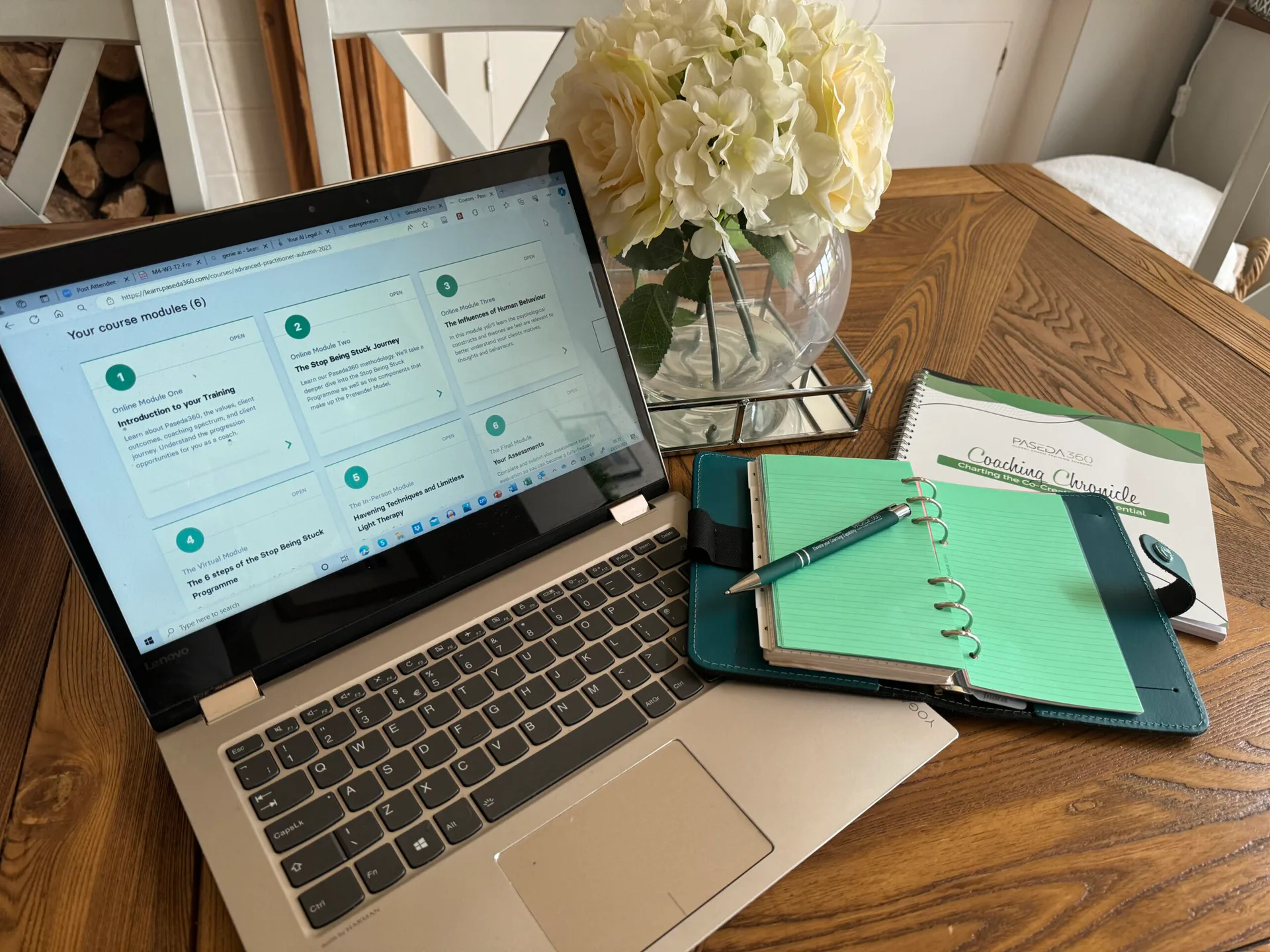
Balancing coach training with a full-time job might seem daunting, but it’s doable with the right strategies.
I’ve been there—managing a demanding corporate role while yearning to make a bigger impact.
While I focused on qualifications like Lean and Six Sigma before coaching, you don’t have to wait. Let me show you how to make it work, even while juggling both.
I’m Angela Cox, and I’ve got over 6,000 hours of coaching experience under my belt. But I’ll let you in on a little secret… I left my corporate job without a coaching qualification or any clue how to run a coaching business.
It was a bold move, and while it worked out for me, it’s not necessarily the approach I’d suggest for everyone. The good news? You don’t have to take such a leap of faith.
Today, I’m going to walk you through how you can balance your coach training with your current full-time job, without losing your mind (or your salary) in the process.
We’ll explore everything from time management strategies to dealing with imposter syndrome, and I’ll share some hard-earned wisdom along the way.
So, grab a cuppa, get comfy, and let’s explore.
The Evolving Landscape of Coach Training
First things first, let’s talk about how coach training has changed.
Modern coach training takes a more holistic approach, blending theory with practical application, neuroscience with psychology, and traditional methods with innovative techniques.
The best part? These programmes are designed with busy professionals like you in mind. They offer flexibility that fits neatly around your work commitments.
One of our graduates, Nicki Crayfourd, shared her experience: “I did quite a lot of research into different coaching programs. The approach and the advanced practitioner is so much more holistic, but also directive at the same time in terms of your approach. That might sound a little bit odd, but other coaching programs I’ve been on tend to be very theoretical, not practical enough, and don’t take into account the true person.”
While there’s no definitive statistic on the average time spent on coach training, most people find they can complete initial training within 6-12 months while working full-time.
The key is finding a programme that offers the right balance of depth and flexibility for your lifestyle.
Time Management: Your New Best Friend
Still have a question? Ask us, and we'll answer it honestly.
Ask a question